Why You Should Play Bloodborne

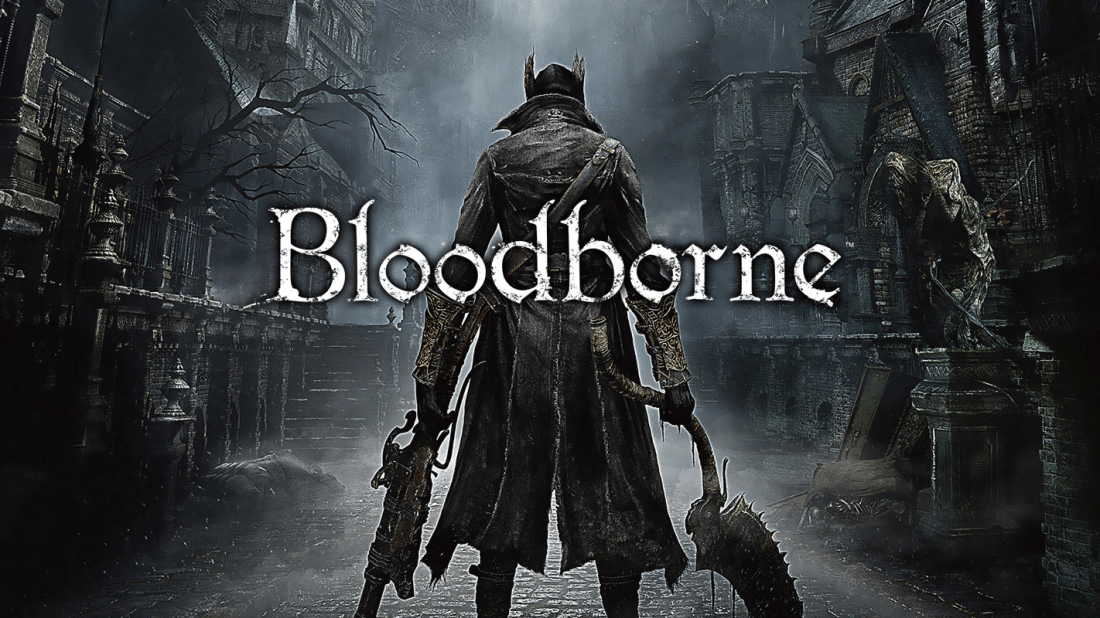
Bloodborne is an incredible game. I added it to my library while it was free for PlayStation Plus members, and didn’t think much of it until I was looking around for a new single player game to sink my teeth into. Having only played small amounts of Dark Souls, I wasn’t sure what to expect, but I was hooked instantly by arguably the most atmospheric game I’ve ever played. It’s a third-person RPG set in Yharnam, a city besieged by an unknown plague that transforms its victims into hideous beasts. You play as a hunter, a man or woman whose goal is to discover the mysteries of this gothic world and ultimately find the source of the plague.

The game throws players into the deep end right from the outset. I wake up in a hospital bed; some sort of wolf-like creature crouches in the room ahead. It’s contently tearing at the flesh of the poor soul that must’ve passed through here before me. I am currently unarmed. “But the wolf only has half-health,” I say. “I can take it,” I say.

youdied

Bloodborne is hard. Really hard. But don’t let that put you off — it makes it that much more rewarding to play through. The game is best described as challenging; you don’t have to be a pro gamer to play it. If you pay attention and learn from the subtle lessons it provides, you’ll be cutting down monsters like an expert in no time. Bloodborne has some of the most intelligent game design I’ve experienced. The whole point of making you fight – and get killed by – the lycanthrope at the beginning is to teach you what happens when you die, and to show you the Hunter’s Dream. This is your hub area, and where you’re given weapons so you can go back to Yharnam and take on the lycanthrope again. Not so scary once you have a saw cleaver and a blunderbuss in your hands.

When it comes to fighting, attack is often your best — and only — form of defence. There’s no hiding behind shields, and your main means of escape is rolling around with such perfect timing that you dodge attacks. But if you get hit, there’s a short period of time in which you can hit back, to harvest the blood of your enemies and restore your own life. Alternatively, you can run away as fast as you can while guzzling blood vials — the choice is yours. This style of combat can be incredibly rewarding. If you’ve put the hours in, you start to learn enemy patterns, how to parry attacks, and when you should just sneak past rather than fight.

Bloodborne’s currency is similar to that of the Dark Souls series, but rather than souls you collect Blood Echoes. These can be used either to level up or buy items and weapons in the Hunter’s Dream. You harvest them by killing enemies, and should you be killed, you’ll have to return to the site of your death to collect them again. It’s a brilliant system that again teaches you to really pick your battles. There was nothing more soul-destroying than when I died again on my way to recover 60,000 Blood Echoes, losing what could have levelled me up four times. It was almost enough for me to turn the PS4 off there and then, but I learned my lesson not to go charging into places I wasn’t prepared for after that.

At first, I felt a bit like Bloodborne was just a reskinned Dark Souls, but it really is much more than that. From Software have reused features from Dark Souls that work, yes, but it’s not overdone. They bring back cooperative multiplayer, and I’m eternally grateful to all of the players that helped me fight bosses I was struggling with. It’s surprising yet heartening to see how many people are still playing Bloodborne — I almost always managed to summon someone in to help when I needed it. But of course, opening up your world to strangers is an invitation for some to invade. In some areas of the game, there are enemies that ring what’s called a “sinister bell,” allowing hostile players to enter your game world to fight you. For the most part, these encounters could be quite fun, however I found that when this happened in late-game areas, it was incredibly frustrating having to fend off some phantom with weapons you didn’t even know you could get, while also being hounded by the other monstrosities around you.

I think Bloodborne would’ve scared me a lot more had I not been able to play it with others. Walking around a dark corner and not knowing what might lie in wait for you is anxiety-inducing to say the least, but I found playing online with the ability to see other players’ notes quite comforting. Players in other worlds can leave each other small messages, sometimes funny, sometimes helpful, sometimes giving little clues to the lore. Alternatively, you can look for red puddles that show you how and where a player died in the area. Thanks to players across the globe, I’ve managed to find hidden paths and secret areas that I would never have found on my own. You can’t trust all of them, though: “secret path ahead” on occasion has meant “I wonder how many idiots I can make walk off of the edge to their death here.”

It’s not just the other players that help you out in Bloodborne. There are many characters with rich stories that you can stumble upon at any moment. Frightened residents can be spoken to through their windows and doors, on occasion offering life-saving items or advice. You can also meet other hunters throughout the game; some are enemies and will attack you on sight, while others are peaceful and will offer you gifts or new side quests. There’s a rare feeling of relief when you find these people; after hacking away at beasts in blood-soaked streets its pleasant to chat to the softly spoken blind man in the Cathedral Ward, to hear his excitement that you’ve returned, or his heartbreak at the events that occur.

While it’s not obvious if you aren’t paying attention, Bloodborne has a truly vast lore. For the longest time, one character kept mentioning a castle and some backstory as to what went on there. I was sure I’d missed a section of the game, until I spent some time looking at the descriptions of some of the items I’d collected. Lo and behold, an invitation to Cainhurst Castle. I’m not even sure where I picked it up; I must’ve ignored it and dismissed it as another random item at the time. The plot for this game is hidden in plain sight and it’s a wonderful feature. Thanks to some inquisitiveness, I discovered an entirely new map section with an awesome boss fight and an end to a character’s storyline that really made me stop and think for a while.

The level design in Bloodborne is outstanding. Its semi-open world map is fun to traverse and filled with all manner of weird and wonderful monsters. The map is made so that you can fast travel from the Hunter’s Dream to other areas by lamp. You can find convenient little shortcuts and hidden areas that help you get around should you want to avoid anything, or quickly return to somewhere you may have lost some Echoes. Finding these secret routes is really important to the gameplay as they can link areas that you’d never expect could be linked. There’s nothing more comforting than seeing the faint white lamp glow that means you’ve reached a safe area — after all, they are your only form of checkpoint. The downside to the lamp system is that you can’t fast travel directly from one to another. You must always go back to the Hunter’s Dream to get anywhere else, sitting through two uncomfortably long loading screens on the way. These didn’t bother me too much, however; if anything they gave me a chance to let out the breath I’d been holding for an entire boss fight.

The creature design is certainly not something to be forgotten. At the beginning of many boss fights, I found myself in awe of the beast in front of me. Learning which limb you had to hit to do the most damage or figuring out what item would be most effective is exhilarating. These battles are so epic – well, except that one where I almost rage quit and never played the game again, but in my defense, the boss kept running around in a nightmare maze and I couldn’t find the jerk. Despite this, winning these encounters is incredibly satisfying. Even the regular enemies have brilliant and varied designs. Some are used in more than one area of the game, but it’s mixed with such a variety of new content that it doesn’t feel cheap or overused.

Bloodborne makes you work hard to earn progress, and as such, it’s earned my respect. While its loading times are less than ideal, the game’s deep lore and intelligent, beautiful design make it well worth waiting for.  Despite being three years old now, the game still has a very active player base, and that must speak volumes on its own. Bloodborne is truly one of the greats, and you’re doing it a disservice to leave it in your backlog.

– I
(Originally posted on Backlog Critic May 2018)

Why You Should Play Mass Effect: Andromeda

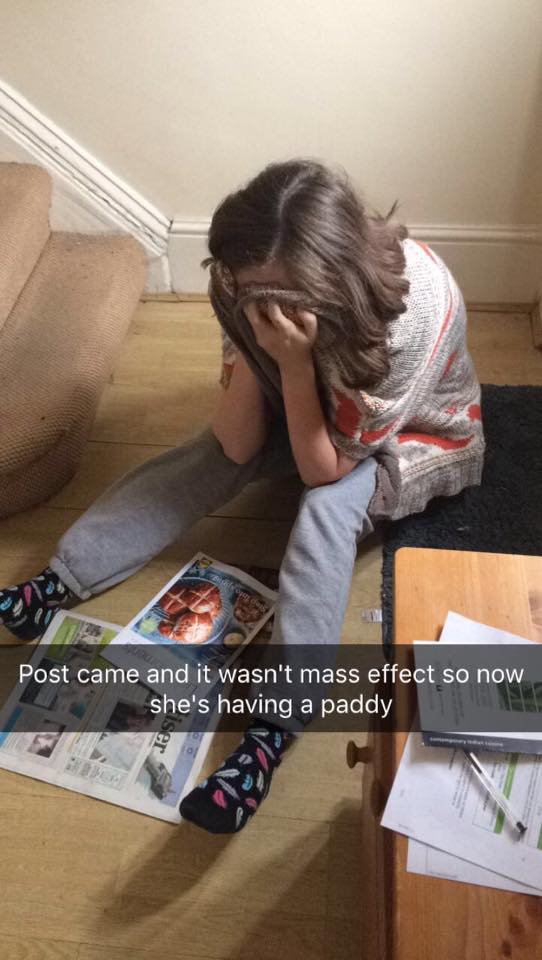
It’s been just over a year since Mass Effect: Andromeda was posted through my letterbox. Being a long-time fan of the series I had pre-ordered the game and was eagerly anticipating its delivery. You can imagine just how distraught I was when I heard a package flump to the floor, only to run downstairs to find Lidl catalogs. My housemate practically keeled over laughing.

mass effect didn't arrive

It was a long morning, and when the game finally arrived it was a long day of sweet non-stop Mass Effect action. But an air of discontentment lingered throughout my playthrough. I didn’t know what to think. I’d seen a few reviews and managed to not spoil Andromeda for myself, but I was all too aware that some people truly hated this game. And there was the first problem with it – the publicity. Almost every review, every Let’s Play, every sarcastic video on YouTube went on and on about how flawed Andromeda was. Though I was excited to play it, I had so many preconceptions in my head, purely because no one was talking about the good parts of the game.

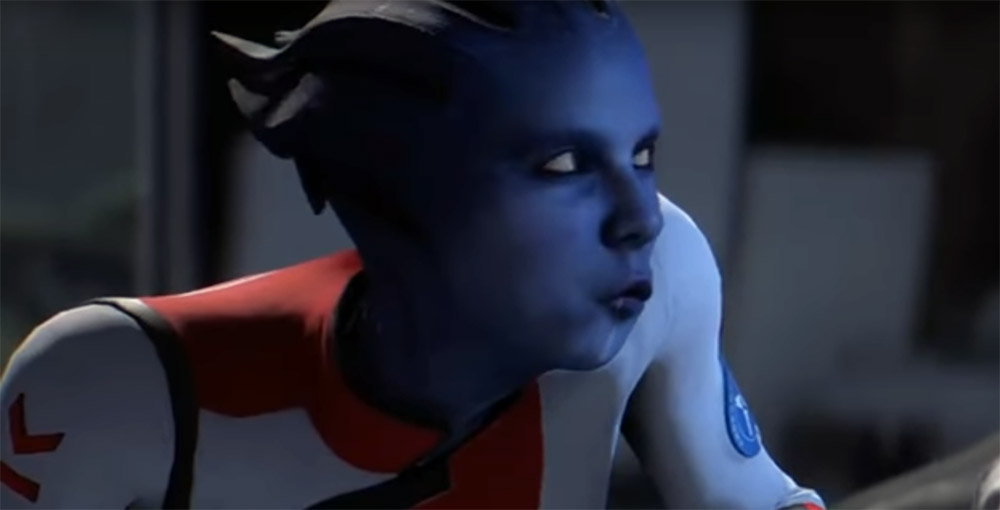
The animation was the most heavily criticized aspect of the game.This is essentially what kicked off all the hate for Andromeda, and rightfully so. It was bad; even I’m not going to deny that. The human and Asari character models and animation left a lot to be desired, pulling odd faces during some cutscenes, and seeming emotionless and dead-eyed in others. This was shocking considering how long the game was in development and how highly anticipated it was. One of the main reasons for this backlash comes down to publishers like EA creating unrealistic expectations of what a AAA title should look like. Gamers got angry when the graphics of Andromeda were barely better than the original ME trilogy, after EA showed demo footage at expos that couldn’t actually be rendered in game. They essentially pulled a bait and switch on us, going to market with in-game graphics that were disappointing at best.

bad mea animation

One of the reasons for this could be because in the early production of Andromeda, EA made BioWare scrap what they had and start over. A game that was supposed to have five years of development ended up with only about a year and a half. Why a lucrative publishing studio like EA would force such an experienced developer into a ridiculously crunched timeline is curious, but regardless of why, the results speak for themselves. By no means am I trying to excuse these poor animations, however it’s important to note that, as this is a backlog review, the game has been patched and looks a lot better – almost how it should have when it was first released.

It’s difficult not to compare Andromeda to the Mass Effect trilogy. While it’s important to treat it as a separate entity, there are a lot of points worth mentioning in between the games, but it’s equally as important not to get too hung up on these comparisons. There were a lot of expectations for Andromeda. The original Mass Effect games raised the bar pretty high, even though the ending of ME3 was the source of a lot of backlash itself, it’s still considered a brilliant game. Andromeda is a new story set in an entirely new galaxy. Yes, it’s still set in the same universe, but the fact that the new Mass Effect game traveled light years away from its other storyline tells you to approach Andromeda with an open mind.

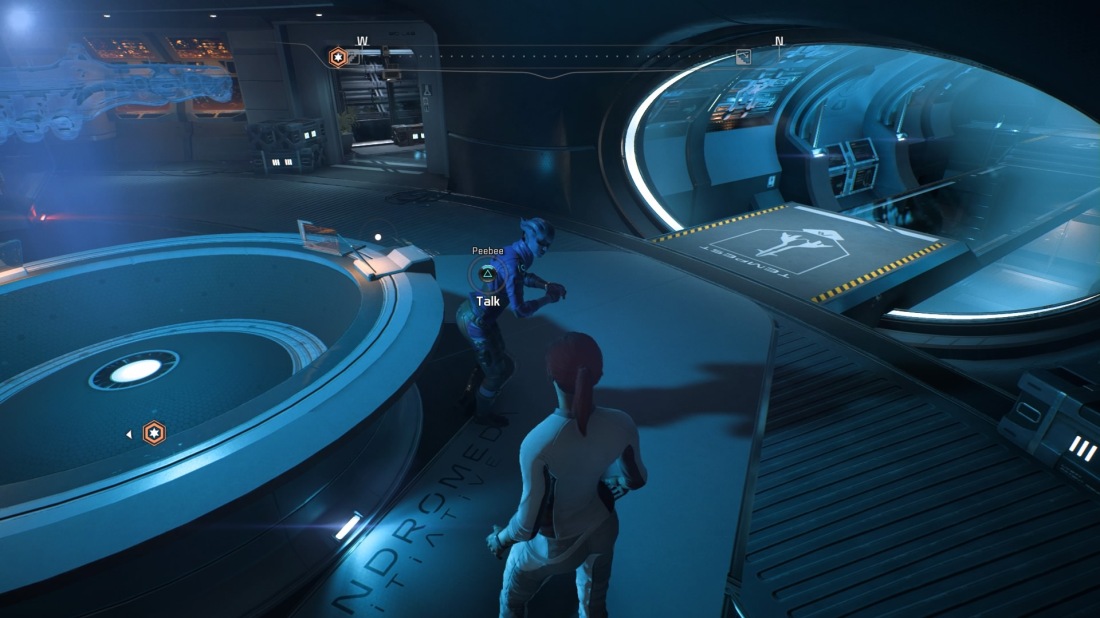
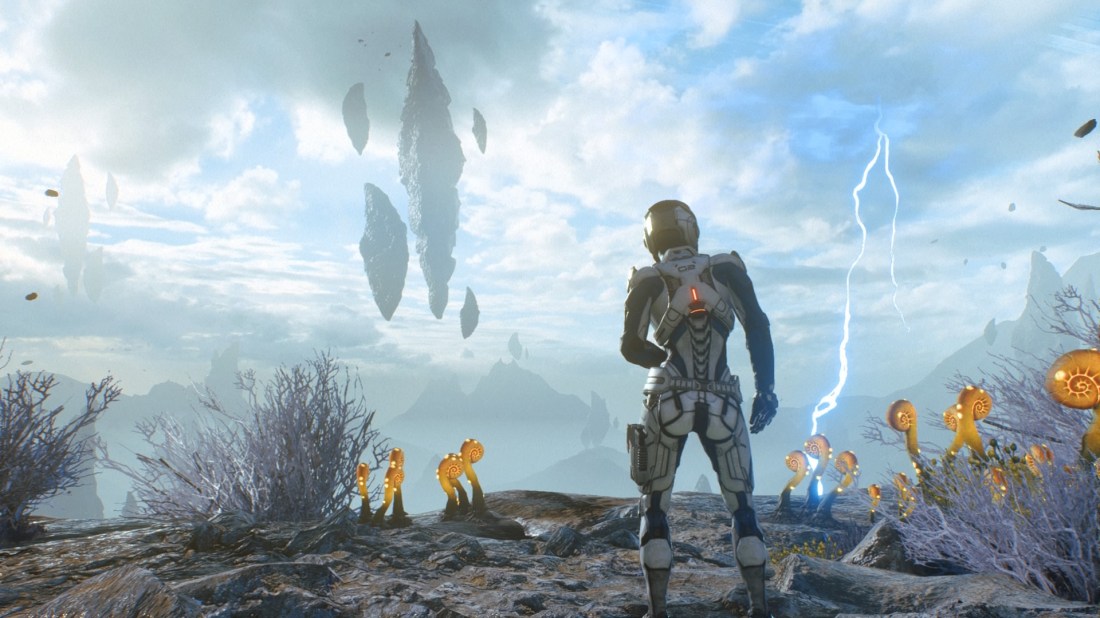
Mass Effect™: Andromeda_20170327213755

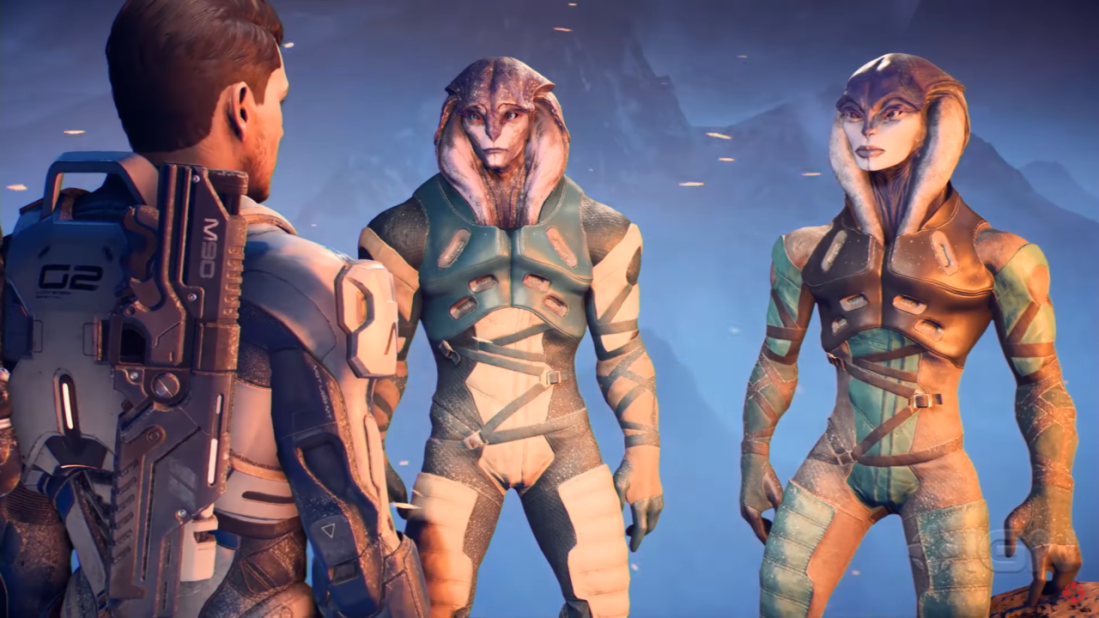
The narrative of the game was really promising: explorers in a new galaxy are searching for a new home when everything begins to fall apart. Andromeda did well to create a sense of newness and unease. You aren’t Commander Shepard anymore – you weren’t already an established  legend before you even picked up the controller – you’re the young, fresh-faced Pathfinder, thrust into the big scary galaxy. For this reason, it feels like the game is a bit lacking in lore, but that’s mostly because you haven’t discovered it yet. A large part of the storyline revolves around meeting and gaining the trust of an entirely new race and exploring their history.

That being said, the plot wasn’t without its holes. You’re told that an ark for every major race made the journey to the Andromeda galaxy: human, Asari, Turian, Salarian, and Quarian. But, disappointingly, you never find out what happened to the Quarian ark. It’s suggested that the Quarian storyline was going to feature in the DLC, but the DLC was canceled after the Andromeda team was dissolved in the wake of the extreme backlash the game faced. As wonderful as the new Angaran race is, I would’ve also loved to know what became of the Elcor, Hanar, Drell, Volus, and the other Milky Way races that were supposedly left behind at the Reapers’ mercy.

angara screenshot

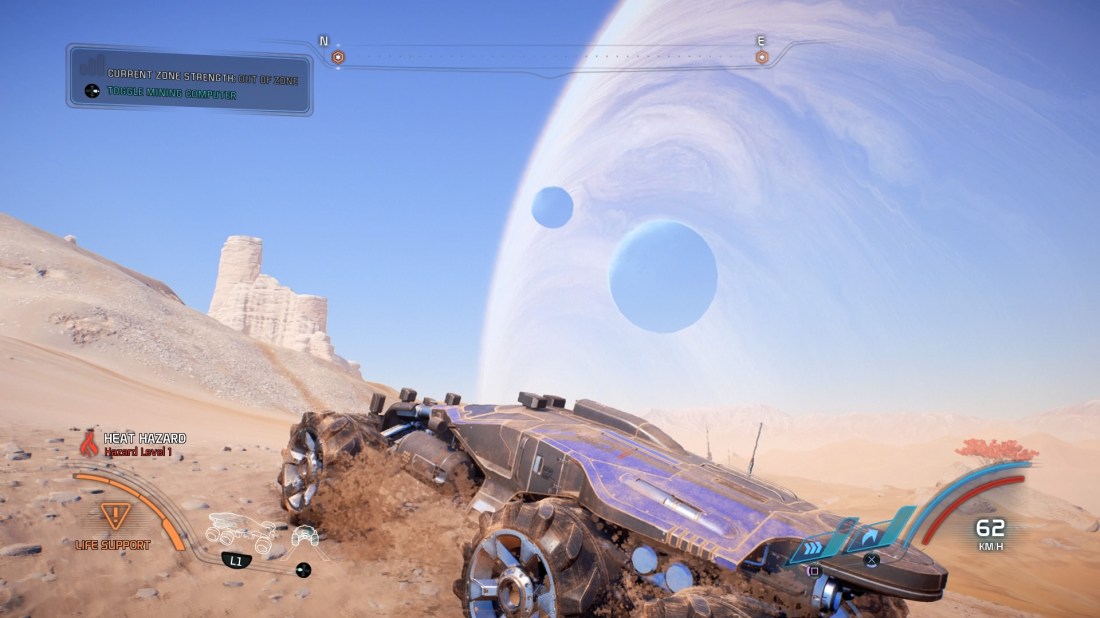
Some of the planets were quite daunting due to the game’s open world nature; the thought of having to cross so much terrain just to continue a small segment of the story was not particularly enjoyable. This is made a lot more entertaining by the new and improved Mako. I was pleasantly surprised at how quick the Mako travel was, and I really enjoyed the party banter among the squadmates you choose to go with you. These little moments of listening in on conversations not directly about the main narrative make the game a much more human experience. Open world environments are really being pushed in games like this, but I thought Andromeda handled it reasonably well. You have the option to spend more time on these planets doing little side quests here and there, but the important part is that a lot of them are optional. The ethos that the game has to be massive and focus on exploration is so unnecessary. Andromeda really does try to push this idea that you should be exploring every nook and cranny, but you don’t have to. The BioWare devs aren’t looking over your shoulder to make sure you have, I promise.

Mass Effect: Andromeda has more in common with Dragon Age: Inquisition than its own predecessors. Both games are  made in the same engine, but the open world nature gives you the same feeling of being given one too many fetch quests. The morality system is more akin to Inquisition too, as the choices you make are more about your emotions on the subject rather than being ‘good’ or ‘bad’, ‘paragon’ and ‘renegade’. The game even goes so far as to give you a psych profile as you play, telling you whether you’re playing more empathetic or, in my case, sarcastically.

Mass Effect™: Andromeda_20170329215959

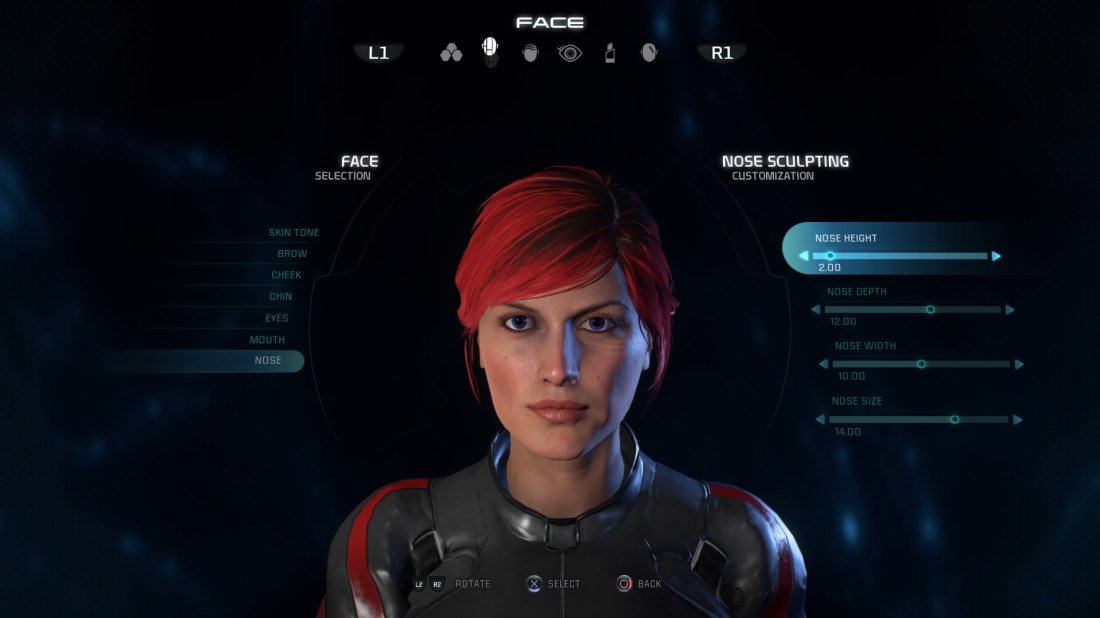
BioWare really went all out with customization – for the Mako. You can have a wide variety of weapons and armor for yourself, but the character customization at the beginning of the game left a bit to be desired. After the extensive character creation screen in Dragon Age: Inquisition, I expected a lot more from Andromeda. You can still make a pretty good looking Pathfinder, but there were nowhere near as many options as you might expect from a game that comes from a studio well-known for making games with deep character customization.

The combat is diverse and engaging, the weapons handle well, and the abilities feel satisfying to use. Mass Effect 3’s multiplayer was the only opportunity you got in the old games to play around with different skill combinations, and I missed the few characters that allowed you to combine sneaky tech skills with biotics. Now in Andromeda it allows you to customize your moveset completely. Going invisible to sneak up on an enemy before biotically ground-pounding to make them go flying felt so incredibly cool. The game does allow you to make presets so you can switch between multiple sets of moves during a fight, but I found that I never really used it. It made more sense to me to level up and hone one combo set that I really enjoyed, rather than spend too much time pausing to mess in a menu mid-combat to figure out what move set I wanted to use. Despite this, it’s clear that a lot of work has gone into making sure you can play the game exactly how you want to.

Mass Effect™: Andromeda_20170323152428

Aside from a few animation issues, the character models for the aliens were really well designed. The Turians and Salarians, who in old Mass Effect codex were listed as well over 7 feet tall, now actually look their height. When you’re in cutscenes with a Turian like Vetra, she actually towers over you, rather than in the older games when Garrus would magically and conveniently be the same height as Shepard. And there was variety in the models! The Turians don’t all look the same and there are more than three women in their entire race. I’ll be honest, some of the designs for the Salarians seemed to lack as much diversity as they had in the trilogy, but it’s still nice to see a variety of these characters finally looking the way they were intended. Even the Krogan have been given more models; I can’t count the number of times I used to mistake random NPCs for Wrex.

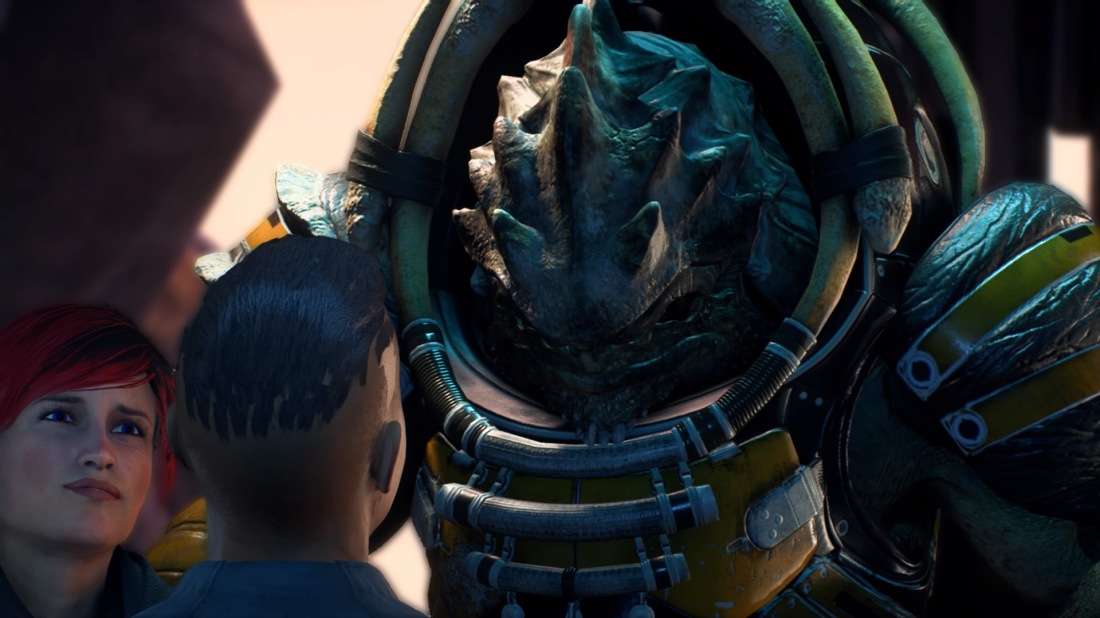
On the subject of characters, Andromeda did a particularly good job of giving us squadmates that we cared about. BioWare has always been brilliant at creating deep characters with great stories to tell. While they might not have quite the emotional impact that other characters in the trilogy had (I’m looking at you, Mordin), the devs did well to make more lovable characters that I felt compelled to get to know. I cared about Vetra and the troubles she had with her sister; I cared about Jaal and the struggles his race were facing; and I cared about Drack, who admittedly at first seemed like a clone of Wrex, but soon revealed a personality and background of his own (despite maintaining those typical Krogan traits we’ve all come to love).

Mass Effect™: Andromeda_20170330144511

No game is without its flaws, and Mass Effect: Andromeda certainly has its fair share. A few plot holes, an open world that’s a bit too open, and silly animations that turned serious moments laughable. Despite these, it’s still a fun game that’s absolutely worth playing from your backlog. Throw away your preconceptions, go into it with an open mind and an open heart for characters that you’ll really learn to love. The initial bugs and poor animations that plagued the game at launch with have long been patched, and it’s an enjoyable RPG that didn’t truly deserve the harsh backlash it got. 

– I

(Originally published on Backlog Critic April 2018)

Ghost Poop and Gremlins: The Indie Charm of Slay the Spire

So recently My review of Slay the Spire was published on Indie haven! This is the original review in question, but you can also find it on Indie Haven. Hope you enjoy it! – I


I meant to write this review well over a week ago, but I didn’t because of the sheer number of hours I spent obsessing over this game. That in itself is the first testament really to just how good it is. Slay the Spire is an incredible little rogue-like that’s been in early access since November. Only recently have my friends dragged me (kicking and screaming) into the world of PC gaming, which is why I didn’t discover this gem until now; but it had such an effect on me that I felt compelled to give it a glowing review.

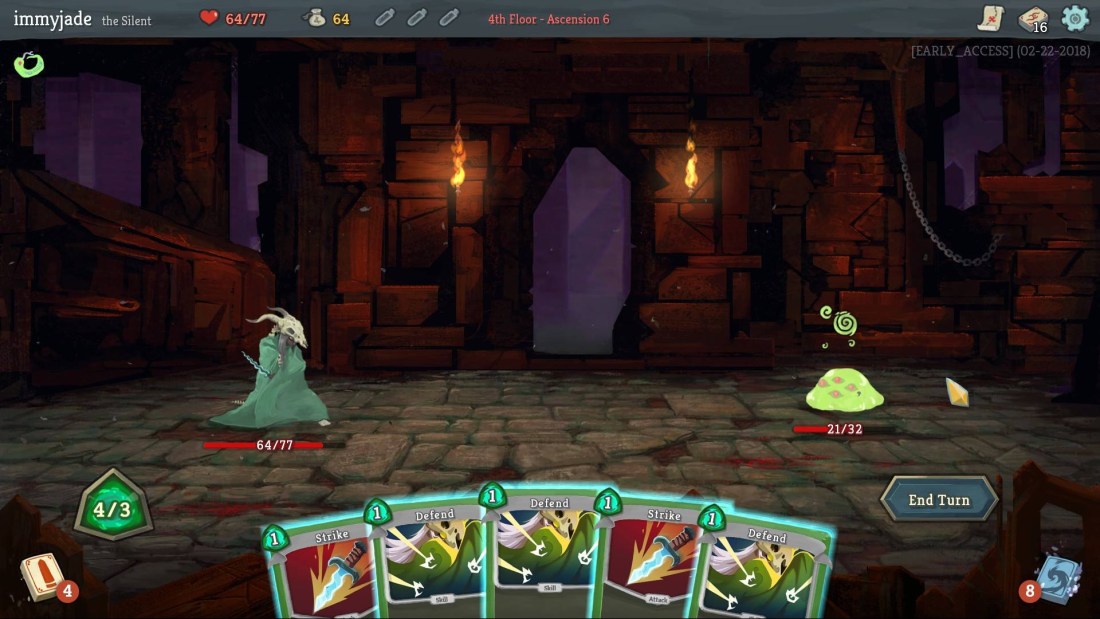
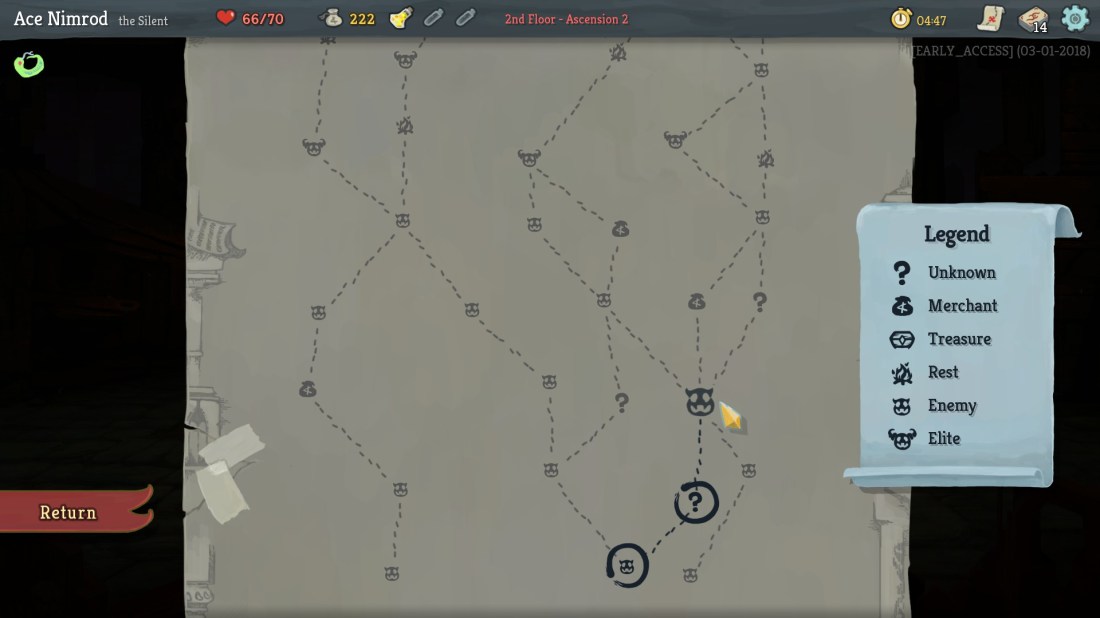
The aim of the game is to reach the top of the Spire, you choose a character; either the Ironclad or the Silent; and with them traverse 50 floors across 3 acts. During each act you make your way across a map where you’re given options to fight normal enemies, mini bosses (elites), go to a merchant, a rest site, or have a mystery encounter. Completing these encounters could earn you cards, relics, potions or money. When you reach the end of an act you fight a big old boss, and if your skills are honed and RNG has been kind to you, you eventually Slay the Spire.

646570_screenshots_20180305015445_1

So the game is a deck-builder, something I thought would bore me to tears, but to my surprise the turn-based combat got me hooked. It’s all about smart forward-thinking; collecting cards you know will synergise to give you a one up against whatever you encounter. It’s a lot of fun thinking about what build you want to go for too. You want to poison a bird-man to death? You got it! You want to use skills and curses to sacrifice your own health to deal mega damage to a giant slime thing? Done! How about collecting cards that build up your defence so high you begin to maniacally laugh as a huge donut hits you with a blow that should’ve killed you, but really only scratched your armour? All of this and more. There’s so much variety to how you can wreck your enemies (…and incidentally, yourself).


An important mechanic of the game is collecting relics. These are mostly helpful little tools that add modifiers somehow to your gameplay. Some might heal you a certain amount when you get into combat, some help you obtain more relics, and some require you obtain curses in return of helping you in some way in combat. Slay the Spire is all about weighing up risks compared to the rewards they give. Sure, having a relic that gives you 1 strength for every curse in your deck sounds ok, but if suddenly you roll a hand of cards that are all detrimental and don’t allow you to attack at all anyway, you’ll be kicking yourself. While there is a lot of planning involved in how to make a successful build, the game can rely heavily on RNG, in that aspect it can be uncontrollable how your game goes if you don’t happen to get the right cards or relics right at the beginning. At the same time if you find yourself on low hp, perhaps going down a route to fight an elite enemy isn’t the best idea.

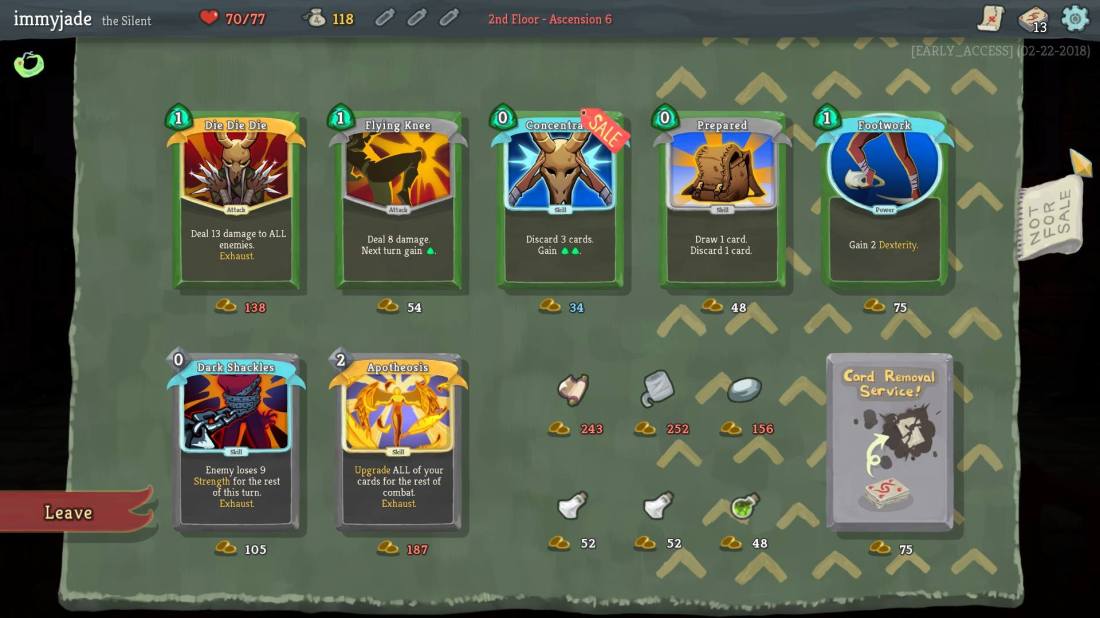
Now, I couldn’t go through this entire review without mentioning the art, Slay the Spire has such a simple but pretty style. The designs for some of the monsters are weird, scary, and kind of funny. A mixture of what you’d expect from typical RPG enemies but with their own twist. There’s also a ton of references to other RPGs and games, my favourite of which being a card titled ‘Die, Die, Die’ with an image of the Silent with their arms crossed over their chest…

28504421_1717452604944452_1579753632_o

If I had to fault the game in any way, it’s simply that it’s not long enough. The game is in early access and there’s more the devs are working on; in the most recent update they’ve changed the ‘start a new game’ screen to have two currently locked modes. As well as this, there’s still a whole new character to be revealed, and for that I’m very excited. But what would be nice is if the game continued on from the third act. My fastest completion of Slay the Spire so far is just under an hour, and it would be great to have a bit more time to polish up my deck to something I was super confident and happy with. I can understand how the short length can be considered a good thing; if you’re the sort of person that can complete something, feel content, and walk away from it, then it’s an enjoyable short experience. I however, am not one of those people, and often find myself yelling “Again! Again! Again!” immediately starting a new playthrough, acting a lot like a child who’s just been on a roller coaster for the first time.

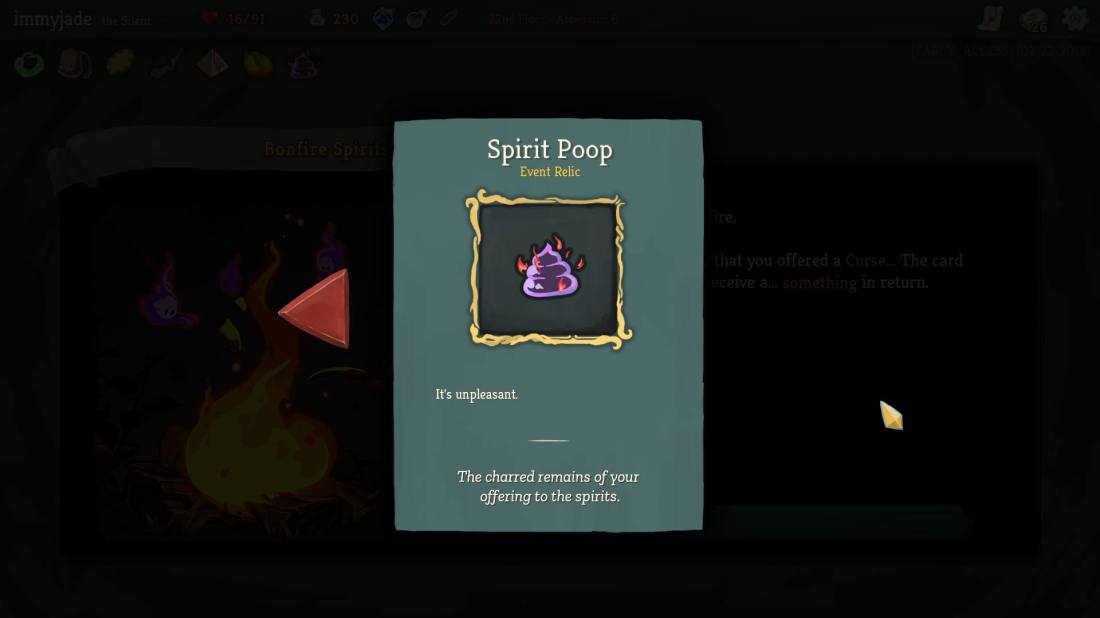
Indie games like this are so important because they really stress the idea that single player games are still so much fun to play; and you can tell that the developers had fun making it too. There’s so many little touches and random encounters that really add to the experience. One of my favourites is if you come across some little flame spirits dancing around a fire, you can offer to throw a card from your deck onto it. If you give them a good card they might heal some of your health; give them a curse however, and they’ll give you a little glowing poop relic. It doesn’t actually do anything, but it cracked me up the first time I got it and I noticed at the end of my game I’d been deducted 1 point, the reason for which was ‘poopy’. I really admire the attention to detail that gives Slay the Spire so much personality.

28503786_1717452591611120_260423669_o

Charming visuals, addictive gameplay and wonderful character to boot; Slay the Spire is undoubtedly my favourite rogue-like. Considering the game is still in early access it feels very polished already, and I can’t wait to see what the developers have in store for it.

– I